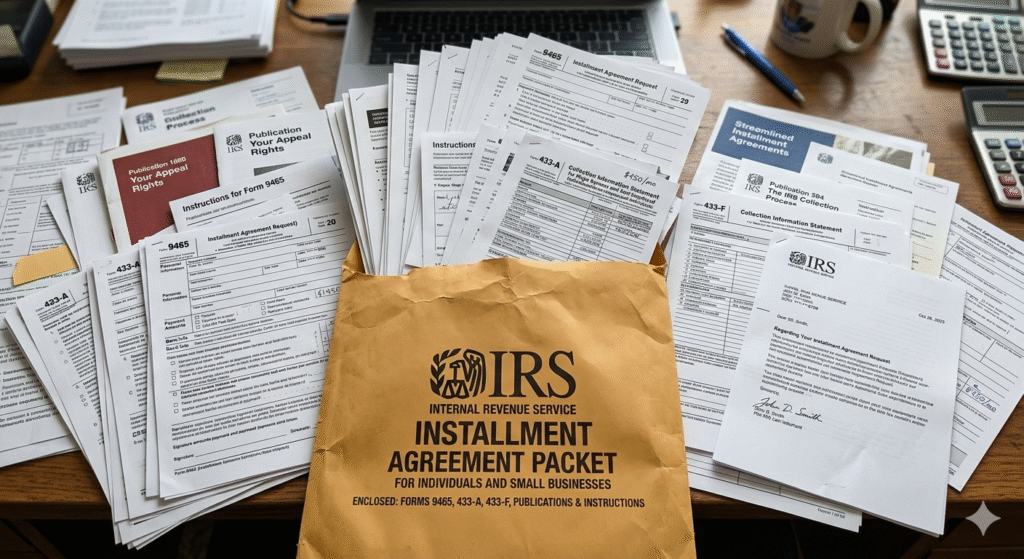
Many taxpayers assume that if they cannot pay their tax debt in full, the IRS will immediately begin aggressive collection actions. Others believe that payment plans are difficult to obtain or only available in limited circumstances. In reality, the IRS offers structured payment solutions designed to help taxpayers resolve their liabilities over time. One of the most common and accessible options is an Installment Agreement, which allows taxpayers to pay their tax debt through manageable monthly payments. While interest and certain penalties may continue to accrue, entering into an Installment Agreement can prevent more severe enforcement actions such as levies and wage garnishments. For individuals and businesses, understanding how Installment Agreements work – and which type applies – is often a key step in resolving IRS debt efficiently.
📘 Reference:Installment Agrement
💡Featured Snippet: What is an IRS Installment Agreement? An Installment Agreement is a payment plan with the IRS that allows taxpayers to pay their tax debt in monthly installments over time instead of paying the full amount upfront.
The Legal Authority Behind Installment Agreements
Installment Agreements are authorized under Internal Revenue Code §6159, which allows the IRS to enter into agreements with taxpayers for the payment of tax liabilities over time. Under this provision, the IRS has discretion to approve payment plans based on a taxpayer’s financial condition and ability to pay. The purpose of these agreements is to facilitate voluntary compliance, enable taxpayers to resolve liabilities without undue hardship, and reduce the need for enforced collection actions. Because these agreements involve financial analysis and negotiation, they are often structured with the assistance of a Washington, DC tax litigation attorney.
📘 Reference:IRC §6159 – Agreements for payment of tax liability in installments
Why Installment Agreements Matter?
For taxpayers who cannot pay their balance in full, an Installment Agreement provides a practical and structured solution. Entering into an agreement can prevent levies and wage garnishments, reduce immediate financial pressure, allow for predictable monthly payments, and provide a path toward resolving tax debt. For taxpayers, this option is often the first line of defense against escalating IRS enforcement.
Who Qualifies for an Installment Agreement?
Most taxpayers with outstanding tax liabilities are eligible for some form of Installment Agreement, provided certain conditions are met:
📌 Filing Compliance
All required tax returns must be filed before the IRS will approve a payment plan.
📌 Amount Owed
The total balance influences the type of agreement available and the documentation required.
📌 Ability to Pay
The IRS evaluates income, expenses, and assets to determine an appropriate monthly payment.
For taxpayers, determining eligibility and structuring the agreement appropriately can significantly affect long-term outcomes.
Types of Installment Agreements
The IRS offers several types of payment plans depending on the amount owed and the taxpayer’s financial situation:
1️⃣Streamlined Installment Agreement ($50k or less)
Available to taxpayers who owe $50,000 or less in combined tax, penalties, and interest. It typically requires minimal financial documentation, is faster, and allows up to 72 months to pay.
2️⃣ Non-Streamlined Installment Agreement (Over $50k)
Applies when the balance exceeds streamlined thresholds or when financial circumstances require detailed review. It requires full financial disclosure and payment terms based on ability to pay.
3️⃣ Partial Payment Installment Agreement
Allows taxpayers to pay less than the full amount over time if a financial analysis proves inability to pay the full debt before the 10-year statute of limitations expires.
Each type requires different levels of documentation and negotiation.
Benefits of an Installment Agreement
There are several benefits to an installment agreement.
📌 Prevention of Enforcement Actions
Once an agreement is in place, the IRS generally refrains from bank levies and wage garnishments.
📌 Manageable Payments
Monthly payments are structured based on the taxpayer’s financial capacity.
📌 Structured Resolution
An installment agreement provides a clear timeline for resolving tax debt.
📌 Reduced Immediate Financial Pressure
An installment agreement allows taxpayers to maintain essential living expenses while addressing their obligations.
Ongoing Obligations Under an Installment Agreement
Taxpayers must meet certain requirements to maintain their agreement, such as make all payments on time, remain current with future tax filings, and pay new taxes as they arise. Failure to comply may result in default and renewed collection activity.
Common Mistakes Taxpayers Make
Taxpayers often encounter issues by failing to file all required returns before applying, underestimating monthly payment obligations, missing payments after approval, and ignoring changes in financial condition. These mistakes can lead to termination of the agreement and renewed enforcement actions.
Why Taxpayers Misunderstand Installment Agreements?
Installment Agreements are often misunderstood because taxpayers assume full payment is required, IRS procedures can appear complex, different types of agreements have varying requirements, and financial disclosure rules are not always clear. As a result, taxpayers may delay applying or select less effective options.
What Happens If an Agreement Is Not Established?
If a taxpayer does not enter into an Installment Agreement or otherwise resolve the liability, the IRS may proceed with filing a federal tax lien, issuing levies on bank accounts, garnishing wages, and seizing assets in extreme cases. Establishing a payment plan early can prevent these outcomes.
When to Seek Legal Guidance?
Taxpayers should consider consulting a Washington, DC tax attorney when:
- Tax debt is substantial.
- Financial circumstances are complex.
- IRS collection actions are imminent.
- Multiple resolution options are available.
- Previous payment plans have failed.
Professional guidance can help ensure that the agreement is structured appropriately and sustainable.
📘 Reference:IRS Form 2848, Power of Attorney
Need help with a similar issue? Contact our firm today for a consultation.
An Installment Agreement offers a practical solution for taxpayers who cannot pay their IRS debt in full. By allowing payments over time, this option helps prevent aggressive collection actions while providing a structured path toward resolution. However, selecting the right type of agreement and maintaining compliance are critical to long-term success. Taxpayers facing IRS debt should act promptly and strategically to secure the most favorable outcome.
Contact Pelham PLLC, a Washington, DC tax attorney firm, for confidential assistance with IRS payment plans and tax debt resolution.
FAQs
What is an Installment Agreement?
It is an IRS payment plan that allows taxpayers to pay their tax debt over time.
Who qualifies for an Installment Agreement?
Most taxpayers with unpaid tax liabilities who are current with filings may qualify.
Do I need to pay the full amount?
Yes, in standard agreements, though other programs may allow partial payment.
Will the IRS stop collections?
Generally, yes, as long as the agreement is in good standing.
Can my payment amount change?
In some cases, yes—especially if financial circumstances change.
Do I need a Washington, DC tax attorney?
Legal guidance can help structure the agreement and avoid costly mistakes.