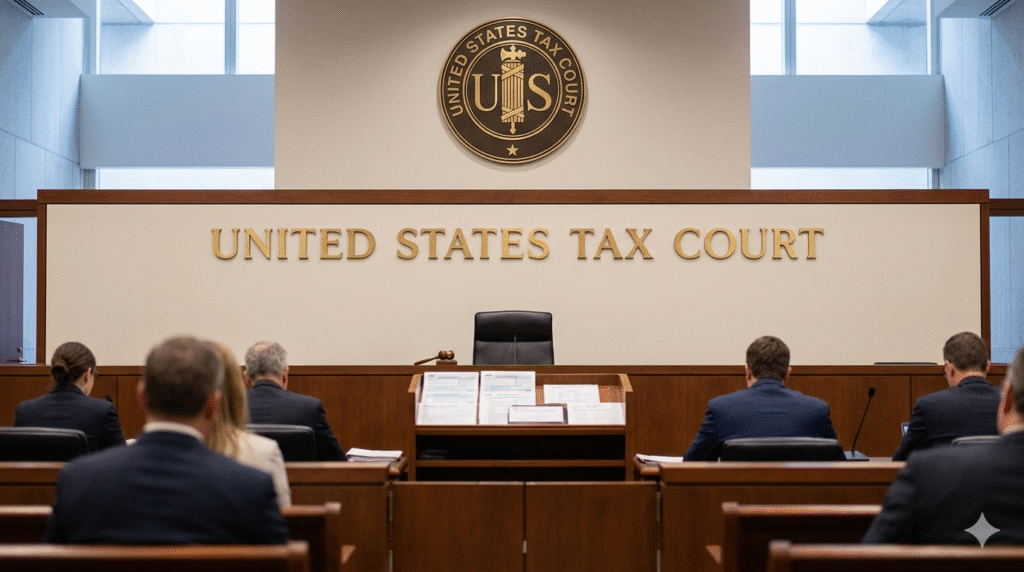
Many taxpayers assume that if they disagree with the IRS, they can take time to evaluate their options, gather documents, and decide whether to challenge the government’s determination. Federal tax litigation does not allow that flexibility. Once the IRS issues a Notice of Deficiency, the taxpayer has a limited window to act. That window is governed by one of the strictest deadlines in federal law – the 90-day Tax Court filing deadline.
If the taxpayer fails to file a petition within that period, the consequences are immediate and severe. The United States Tax Court loses jurisdiction, and the IRS may proceed to assess and collect the tax. For taxpayers working with a Washington, DC tax attorney, understanding and meeting this deadline is critical. Missing it can permanently eliminate the opportunity to challenge the IRS in Tax Court.
📘Reference: IRC §6213 – Restrictions applicable to deficiencies; petition to Tax Court
What the 90-Day Tax Court Deadline Is?
The 90-day deadline is the period during which a taxpayer may file a petition with the United States Tax Court after receiving a Notice of Deficiency. This deadline is established by Internal Revenue Code §6213(a). The 90-day period begins on the date the IRS mails the Notice of Deficiency, not the date the taxpayer receives it. During this period, the IRS is prohibited from assessing the tax. This restriction gives the taxpayer an opportunity to seek judicial review before payment. However, once the 90-day period expires, the IRS may assess the tax and begin collection. For taxpayers represented by a Washington, DC tax court attorney, tracking the exact start and end of this deadline is one of the most important steps in preserving legal rights.
📘Reference: IRS Notice of Deficiency Guidance
Why the Deadline Is So Strict?
The 90-day deadline is not merely procedural—it is jurisdictional. This means that the United States Tax Court does not have authority to hear a case unless the petition is filed within the statutory time period. Courts have consistently held that even a petition filed one day late must be dismissed. The IRS is not required to grant extensions, and taxpayers cannot rely on equitable arguments to avoid the deadline in most cases. Because the deadline determines whether the court has authority to hear the case, it is one of the most rigidly enforced rules in federal tax litigation. For this reason, Washington, DC tax litigation attorneys treat the 90-day deadline as a critical, non-negotiable requirement.
How the 90-Day Period Is Calculated?
Calculating the deadline requires careful attention to statutory rules.
📌Start Date
The 90-day period begins on the date the IRS mails the Notice of Deficiency, as stated on the notice.
📌End Date
The petition must be filed on or before the 90th day.
📌Taxpayers Outside the United States
If the notice is addressed to a taxpayer outside the United States, the deadline is extended to 150 days.
Even small errors in calculating the deadline can result in dismissal of the case. For this reason, taxpayers often rely on a Washington, DC tax attorney to verify filing deadlines and ensure compliance.
📘Reference: IRC §6213 – Restrictions applicable to deficiencies; petition to Tax Court
Common Mistakes That Lead to Missed Deadlines
Taxpayers frequently miss the 90-day deadline due to avoidable errors. Common mistakes include:
- Misreading the Notice of Deficiency;
- Assuming the deadline starts upon receipt;
- Attempting to negotiate with the IRS instead of filing a petition;
- Waiting until the last day to mail the petition;
- Using incorrect mailing methods; and/or
- Filing in the wrong court.
These errors can result in dismissal of the case and loss of Tax Court rights. Avoiding these mistakes is a key part of effective representation by a Washington, DC tax attorney.
What Happens If the Deadline Is Missed?
If the taxpayer fails to file a petition within the 90-day period, the consequences are immediate. The IRS may assess the tax, add penalties and interest, and/or initiate collection actions, such as liens and levies. At that point, the taxpayer generally loses the ability to challenge the liability in Tax Court. Instead, the taxpayer may need to:
- Pay the tax in full;
- File an administrative refund claim; and
- Pursue litigation in federal court.
These options are typically more costly and procedurally complex than Tax Court litigation. For this reason, missing the deadline can significantly weaken the taxpayer’s legal position.
📘Reference: IRS Collections Process
Why Taxpayers Misunderstand the Deadline?
The 90-day deadline is frequently misunderstood because it differs from other IRS timelines. For example:
- Audit deadlines may be extended;
- Collection deadlines may be negotiated; and/or
- Administrative appeals may allow flexibility.
In contrast, the Tax Court filing deadline is rigid. Taxpayers who assume they have additional time – or that negotiations will pause the deadline – may lose their right to judicial review. This misunderstanding is a common issue addressed by Washington DC tax attorneys handling IRS disputes.
📘Reference: IRS Taxpayer Rights
When to Seek Legal Guidance?
Taxpayers should seek legal guidance immediately after receiving a Notice of Deficiency. Legal assistance is particularly important when:
- The deadline is approaching;
- The tax liability is significant;
- The case involves complex legal issues; and
- Litigation is likely.
A Washington, DC tax attorney can evaluate the case, prepare the petition, and ensure it is filed within the required time period. Because the deadline cannot be extended, prompt action is critical.
📘Reference: IRS Form 2848 – Power of Attorney
Need help with a similar issue? Contact our firm today for a consultation.
The 90-day Tax Court deadline is one of the most critical rules in federal tax litigation. It determines whether a taxpayer can challenge an IRS determination before paying the disputed tax. Once the deadline passes, the Tax Court loses jurisdiction, and the IRS may proceed with assessment and collection. Taxpayers who receive a Notice of Deficiency should act immediately to evaluate their options and preserve their rights. Understanding – and meeting – the 90-day deadline can make the difference between successful litigation and losing the case before it begins.
Contact Pelham PLLC, a Washington, DC tax attorney firm, for confidential Tax Court litigation counsel.
FAQs
What is the 90-day Tax Court deadline?
The 90-day Tax Court deadline is the time period a taxpayer has to file a petition in the United States Tax Court after receiving a Notice of Deficiency.
When does the 90-day deadline start?
The deadline begins on the date the IRS mails the Notice of Deficiency, not when the taxpayer receives it.
What happens if I miss the 90-day Tax Court deadline?
If the deadline is missed, the Tax Court loses jurisdiction and the IRS may assess the tax and begin collection.
Can the IRS extend the 90-day deadline?
No. The 90-day deadline is jurisdictional and cannot be extended by the IRS or the court.
What is the 150-day rule for Tax Court?
If the Notice of Deficiency is mailed to a taxpayer outside the United States, the deadline is extended to 150 days.
Do I need a Washington, DC tax attorney to file a Tax Court petition?
While not required, a Washington, DC tax attorney can ensure the petition is filed correctly and on time, preserving your right to challenge the IRS.
Can I still negotiate with the IRS after receiving a 90-day letter?
Yes, but you must still file a Tax Court petition within 90 days to preserve your rights.
When should I contact a Washington, DC tax attorney about a Tax Court deadline?
Immediately after receiving a Notice of Deficiency, because the deadline begins running right away.