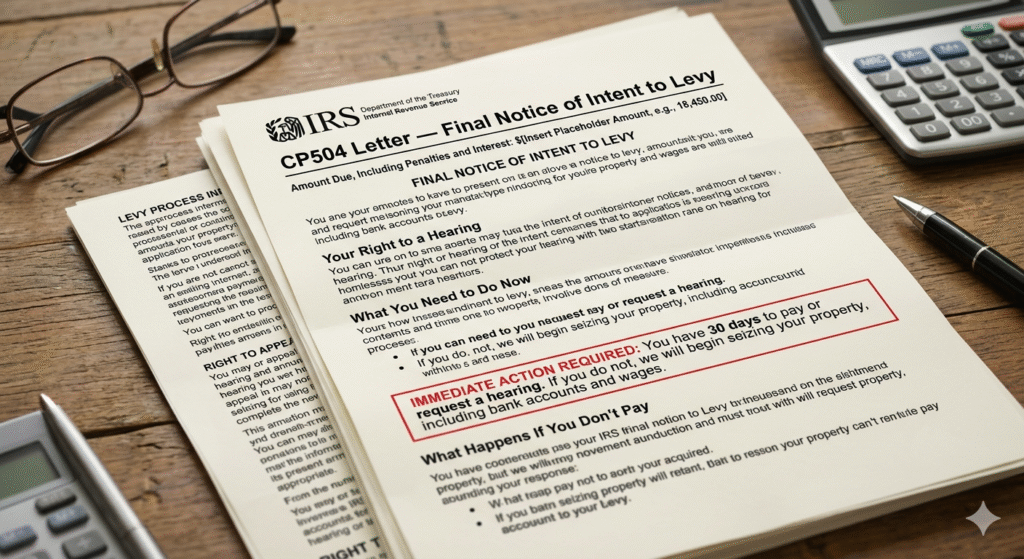
Many taxpayers assume that IRS notices are simply routine reminders that can be addressed later without immediate consequences. Others believe that enforcement actions such as levies only occur after extensive warning and negotiation. In reality, certain IRS notices signal that collection action is imminent. One of the most serious of these is the CP504 letter, which serves as a final warning before the IRS begins seizing assets. A CP504 notice indicates that the IRS intends to levy – starting with a taxpayer’s state tax refund – and may escalate to more aggressive actions if the balance remains unpaid. Ignoring this notice can lead to rapid enforcement, including bank levies, wage garnishments, and potential tax liens. For individuals and businesses working with a Washington, DC tax attorney, understanding how to respond to a CP504 letter is critical to preventing escalation and protecting financial stability.
📘 Reference:IRS CP504 Letter – Final Notice of Intent to Levy
💡 Featured Snippet: What is a CP504 letter from the IRS? A CP504 letter is a final IRS notice of intent to levy, warning that the IRS may seize a taxpayer’s state tax refund and take further collection action if a tax debt is not resolved promptly.
The Legal Authority Behind the CP504 Notice
The CP504 notice is part of the IRS collection process authorized under Internal Revenue Code §6331, which allows the IRS to levy a taxpayer’s property after providing notice and demand for payment. Before issuing a full levy, the IRS must provide notice of its intent to seize assets. The CP504 is one of the warnings in this sequence, indicating that the IRS is preparing to act. While the CP504 specifically references a levy on a state tax refund, it also signals that broader enforcement actions may follow if the liability remains unresolved. For taxpayers facing this stage of collection, understanding these statutory procedures is often essential in consultations with a Washington, DC tax litigation attorney.
📘 Reference: IRC §6331
Why the CP504 Letter Matters?
The CP504 notice is significant because it represents a transition from routine billing to active enforcement. At this stage, the IRS has assessed the tax, multiple notices have likely been issued, and the taxpayer has not resolved the balance. The CP504 is therefore a critical turning point. Failing to act can result in immediate financial consequences and limited resolution options. For taxpayers, early action at this stage can prevent escalation into more aggressive collection measures.
The Consequences of Ignoring a CP504 Letter
Failing to respond to a CP504 notice can lead to serious financial and legal consequences.
📌 State Tax Refund Levy
The IRS will seize your state tax refund as an initial enforcement action.
📌 Bank Levies
The IRS may freeze and seize funds in your bank accounts.
📌 Wage Garnishment
A portion of your wages may be withheld directly by your employer.
📌 Federal Tax Lien
The IRS may file a lien against your property, affecting financial transactions and creditor relationships.
📌Escalating Enforcement
Continued inaction can result in broader asset seizure and long-term financial disruption.
Resolution Options Available to Taxpayers
Several options may be available to resolve the underlying tax debt and prevent further enforcement:
- Installment Agreements: Monthly payment plans that allow taxpayers to resolve liabilities over time.
- Offer in Compromise: Settlement option allowing taxpayers to pay less than the full amount owed if eligible.
- Currently Not Collectible Status: Temporary suspension of collection activity due to financial hardship.
- Penalty Abatement: Reduction or removal of penalties to lower the overall balance.
Selecting the appropriate option often requires analysis by a Washington, DC tax attorney.
📘 Reference:
Why Taxpayers Misunderstand CP504 Notices?
The CP504 notice is frequently misunderstood because it appears similar to earlier IRS notices, the term “intent to levy” may not be fully understood, taxpayers assume additional time is available, and IRS processes involve multiple overlapping notices. This confusion can lead to delayed action and increased financial risk.
When to Seek Legal Guidance?
Taxpayers should consider consulting a Washington, DC tax attorney when a CP504 notice has been received, IRS collection actions are escalating, payment in full is not possible, multiple tax years are involved, and enforcement actions may impact assets or income. Early intervention can significantly improve outcomes and prevent more severe consequences.
📘 Reference:IRS Form 2848, Power of Attorney
Need help with a similar issue? Contact our firm today for a consultation.
The CP504 letter is a critical warning that the IRS is preparing to take collection action. While it may begin with a levy on a state tax refund, it often signals the potential for broader enforcement if the issue is not addressed promptly. Understanding the meaning of this notice – and responding quickly – can prevent serious financial consequences and preserve resolution options. Taxpayers who take early action are far more likely to achieve favorable outcomes and avoid escalating enforcement.
Contact Pelham PLLC, a Washington, DC tax attorney firm, for confidential assistance in responding to IRS CP504 notices and resolving tax debt.
FAQs
What is a CP504 letter?
It is an IRS notice of intent to levy, warning that collection action is about to begin.
What will the IRS take first?
Typically, the IRS will levy your state tax refund first.
Can the IRS take my bank account?
Yes, if the issue is not resolved, the IRS may levy bank accounts and wages.
Can I stop a levy after receiving CP504?
Yes, by resolving the debt or entering into an approved payment arrangement.
Do I need a Washington, DC tax attorney?
Legal guidance can help prevent enforcement actions and secure the best resolution.