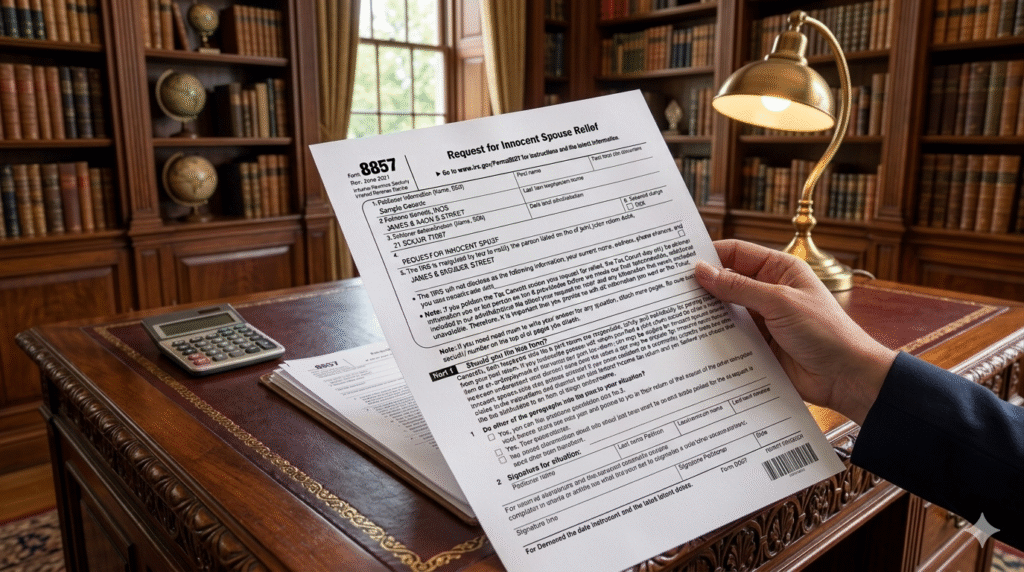
Many taxpayers assume that signing a joint tax return means they are permanently responsible for any tax liability associated with that return. Others believe that if their spouse made mistakes – or even intentionally misreported income – they have no way to separate themselves from the resulting tax debt. Federal tax law imposes joint and several liability on spouses who file jointly, meaning each spouse can be held fully responsible for the entire tax obligation. However, the law also recognizes that this result can be unfair in certain circumstances. To address this issue, the IRS provides a structured relief program known as Innocent Spouse Relief, which allows qualifying taxpayers to avoid liability for tax, penalties, and interest caused by a spouse or former spouse. When properly applied, this relief can significantly reduce or eliminate tax debt. But eligibility is strictly defined, and the process requires careful documentation and legal analysis. For individuals working with a Washington, DC tax attorney, determining whether Innocent Spouse Relief applies is often a critical step in resolving IRS disputes and protecting financial stability.
📘Reference: Innocent Spouse Relief
💡Featured Snippet: What is Innocent Spouse Relief? Innocent Spouse Relief is an IRS program that allows a taxpayer to avoid responsibility for tax, penalties, and interest caused by a spouse or former spouse’s errors on a jointly filed tax return, provided specific eligibility requirements are met.
The Legal Authority Behind Innocent Spouse Relief
Innocent Spouse Relief is governed by Internal Revenue Code §6015, which provides exceptions to the general rule of joint and several liability for married taxpayers filing jointly. Under federal tax law, both spouses are typically responsible for the full amount of tax reported – or underreported – on a joint return. Section 6015 creates avenues for relief when holding one spouse liable would be inequitable. The purpose of this statute is to promote fairness in the tax system, protect taxpayers from liability arising from a spouse’s actions, and provide equitable remedies in cases of financial or informational imbalance.
📘Reference: IRC §6015 – Relief from joint and several liability on joint return
Why Innocent Spouse Relief Matters?
Tax liabilities arising from joint returns can be substantial, particularly when they involve unreported income, improper deductions or credits, or misstated financial information. Without relief, the IRS may pursue either spouse for the full amount owed – regardless of who caused the issue. For taxpayers facing IRS enforcement, Innocent Spouse Relief can eliminate unfair financial responsibility, prevent aggressive collection actions, and provide a path toward financial independence. In many cases, this relief is essential to achieving a fair resolution.
Eligibility Requirements for Innocent Spouse Relief
To qualify for traditional Innocent Spouse Relief under IRC §6015(b), taxpayers must meet several criteria:
1️⃣ Joint Tax Return Filed
The relief applies only to jointly filed tax returns.
2️⃣ Erroneous Items Attributable to the Other Spouse
The tax understatement must result from items attributable to the other spouse or former spouse, such as unreported income, improper deductions or credits, or incorrect reporting of assets or basis.
3️⃣ Lack of Knowledge
At the time the return was signed, the requesting spouse must not have known – and must not have had reason to know – of the error.
4️⃣Inequity
Considering all circumstances, it must be unfair to hold the requesting spouse liable.
For taxpayers working with a Washington, DC tax attorney, proving these elements is often the most critical and complex part of the process.
Types of Innocent Spouse Relief
The IRS provides three distinct forms of relief under §6015:
1️⃣Innocent Spouse Relief (§6015(b))
Provides relief from additional tax owed when one spouse or former spouse caused the understatement and the other spouse lacked knowledge.
2️⃣ Separation of Liability Relief (§6015(c))
Available relief to taxpayers who are divorced, legally separated, or not living together for at least 12 months. This relief allocates the tax liability between spouses based on their respective responsibility.
3️⃣ Equitable Relief (§6015(f))
If a taxpayer does not qualify under the first two categories, equitable relief may still be available if it would be unfair to hold them liable. This form of relief often considers broader factors, including financial hardship and overall fairness.
📘Reference: IRC §6015 – Relief from joint and several liability on joint return
Common Situations Where Taxpayers Seek Relief
Innocent Spouse Relief frequently arises in cases involving divorce or separation, hidden income by a spouse, financial control by one spouse, business income not disclosed, or improper deductions claimed without knowledge. These situations often involve complex factual and legal issues requiring careful documentation.
When to Seek Legal Guidance?
Taxpayers should consider consulting a Washington, DC tax attorney when significant joint tax liabilities exist, a spouse or former spouse caused the tax issue, divorce or separation is involved, IRS collection actions have begun, or relief eligibility is unclear. Legal guidance can help ensure that the request is properly structured and supported.
📘Reference: IRS Form 2848, Power of Attorney
Need help with a similar issue? Contact our firm today for a consultation.
Innocent Spouse Relief provides a critical safeguard for taxpayers who would otherwise be held responsible for tax liabilities caused by a spouse or former spouse. Although joint tax returns create shared responsibility, federal tax law recognizes that fairness requires exceptions in certain situations. By understanding the eligibility requirements and properly requesting relief, taxpayers can eliminate or reduce liabilities that do not reflect their own actions or knowledge. However, success often depends on timing, documentation, and legal strategy.
Contact Pelham PLLC, a Washington, DC tax attorney firm, for confidential assistance with Innocent Spouse Relief and IRS dispute resolution.
FAQs
What is Innocent Spouse Relief?
It is an IRS program that allows a taxpayer to avoid liability for tax errors caused by a spouse on a joint return.
Who qualifies for Innocent Spouse Relief?
Taxpayers who filed jointly, lacked knowledge of errors, and meet fairness requirements under IRS rules.
Can I apply after divorce?
Yes, relief is often requested after divorce or separation.
Will my spouse be notified?
Yes, the IRS is required to notify the other spouse of the request.
Can I still qualify if I knew something was wrong?
Generally no, unless equitable relief applies under broader circumstances.
Do I need a Washington, DC tax attorney?
While not required, legal guidance can improve the strength and success of your claim.