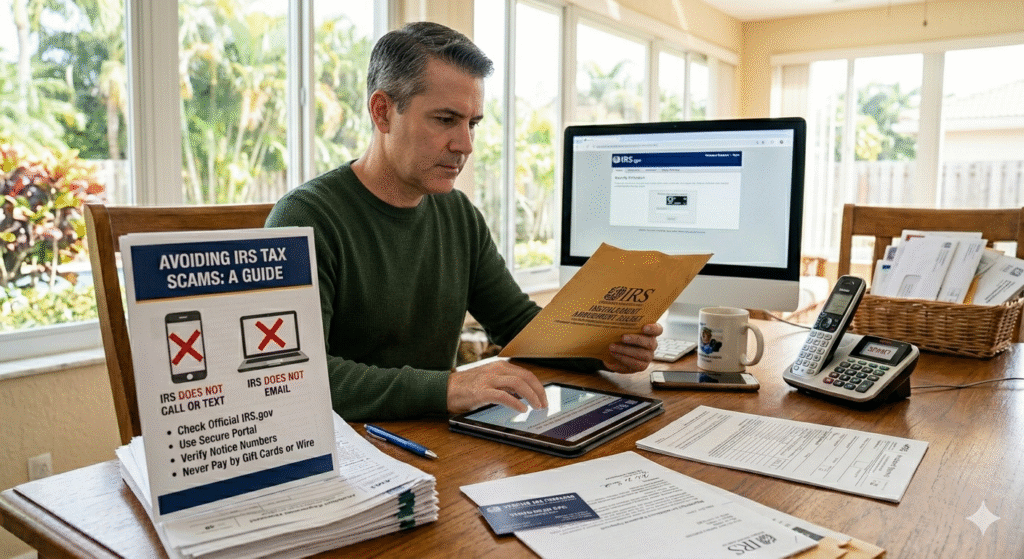
Many taxpayers assume that communications related to taxes – especially those appearing urgent or official – are legitimate. Others may feel pressured to act quickly when confronted with threats involving the IRS, particularly when the message suggests immediate consequences. In reality, tax scams are increasingly sophisticated and operate year-round, targeting individuals through phone calls, emails, text messages, and even physical mail. These schemes often rely on fear, urgency, and confusion about IRS procedures to extract money or sensitive personal information. Taxpayers who are unfamiliar with how the IRS actually communicates are particularly vulnerable. Scammers frequently target individuals facing financial stress or those less familiar with digital fraud tactics. For individuals and families, understanding how IRS scams operate is essential to protecting financial information, avoiding fraud, and ensuring that legitimate tax matters are handled appropriately.
💡 Featured Snippet: How can you tell if an IRS communication is a scam? The IRS generally initiates contact by mail and does not demand immediate payment, threaten arrest, or request payment through gift cards or wire transfers. Unexpected phone calls, emails, or texts claiming to be from the IRS are often scams.
The Legal Framework of IRS Communication
The IRS follows specific procedures when contacting taxpayers regarding tax matters. Typically, the IRS initiates contact through official mailed correspondence, provides written notice of any balance due or action required, and allows time for response before enforcement actions. Because of these structured procedures, unexpected or aggressive communications – especially those demanding immediate payment – are strong indicators of fraud. Understanding these rules is often emphasized by a Washington, DC tax litigation attorney when advising clients on how to distinguish legitimate IRS notices from scams.
Why Tax Scams Matter?
Tax scams can have serious consequences, including financial loss from fraudulent payments, identity theft and misuse of personal information, unauthorized tax filings, and long-term credit and financial damage. Because scammers often impersonate government authority, victims may feel compelled to act quickly without verifying the legitimacy of the communication. Recognizing these risks is critical to preventing fraud.
Common IRS Tax Scams to Watch For
1️⃣ IRS Impersonation Phone Calls
⚠️ How it works?
Scammers pose as IRS agents and use aggressive tactics to pressure individuals into making immediate payments. These calls often include threats such as arrest, deportation, or license suspension. They may demand payment through wire transfers, gift cards, or cryptocurrency.
🛑 Key Warning Signs
Key warning signs include immediate payment demands, threats of arrest or legal action, and requests for unconventional payment methods. The IRS does not initiate contact by phone in this manner, nor does it demand payment through non-standard channels.
2️⃣ Phishing Emails and Text Messages
⚠️ How it works?
Fraudulent emails or text messages appear to come from the IRS or a tax-related organization. These messages often include links to fake websites designed to collect personal or financial information.
🛑 Key Warning Signs
Key warning signs include unsolicited messages requesting sensitive data, links directing to unofficial websites, and urgent language designed to prompt immediate action. The IRS does not contact taxpayers by email or text regarding tax issues.
3️⃣ Fraudulent Tax Preparers
⚠️ How it works?
Individuals posing as tax professionals promise unusually large refunds to attract clients. They may falsify tax return information to inflate refunds and increase their fees.
🛑 Key Warning Signs
Key warning signs include fees based on refund size, refusal to sign the tax return, and lack of verifiable credentials. Taxpayers remain legally responsible for the accuracy of their returns—even if prepared by a third party.
4️⃣ Fake IRS Notices
⚠️ How it works?
Scammers send letters that mimic official IRS correspondence, claiming unpaid taxes or penalties. These notices often direct recipients to contact fraudulent representatives or submit payment.
🛑 Key Warning Signs
Key warning signs include errors in formatting or spelling, vague or inconsistent instructions, and contact information that does not match official IRS channels. Verifying notices through official IRS contact methods is essential.
How to Protect Yourself and Your Family?
- Verify All Communications: Always confirm IRS correspondence by contacting the IRS directly using official contact information.
- Understand IRS Procedures: Knowing that the IRS primarily communicates by mail can help identify fraudulent outreach attempts.
- Educate Family Members: Discuss common scams with family members—especially those who may be more vulnerable to high-pressure tactics.
- Use Reputable Tax Professionals: Work only with verified and credentialed tax professionals. Check qualifications and professional affiliations before engaging services.
- Protect Personal Information: Safeguard sensitive information such as Social Security numbers, bank account details, and tax documents.
What to Do If You Suspect a Tax Scam?
If you believe you have been targeted by a scam, do not respond to the communication, do not provide personal or financial information, report the incident to the IRS and appropriate authorities, and monitor financial accounts for suspicious activity. Taking immediate action can help limit potential damage.
How Taxpayers Become Vulnerable to Scams?
Taxpayers are often targeted when they are unfamiliar with IRS procedures, they are under financial stress, they receive unexpected or urgent communications, and they lack access to professional guidance. Scammers exploit confusion and urgency, making education and awareness critical.
When to Seek Professional Guidance?
Taxpayers should consider consulting a Washington, DC tax attorney when they receive a suspicious IRS notice, they are unsure whether a communication is legitimate, they are facing actual IRS enforcement actions, and they need assistance verifying tax obligations. Professional guidance can help distinguish between legitimate IRS issues and fraudulent schemes.
📘 Reference:IRS Form 2848, Power of Attorney
Need help with a similar issue? Contact our firm today for a consultation.
Tax scams continue to evolve, targeting taxpayers through increasingly sophisticated methods. Understanding how the IRS communicates – and recognizing common warning signs – can prevent significant financial loss and identity theft. By remaining vigilant, verifying communications, and seeking professional guidance when needed, taxpayers can protect themselves and their families from fraudulent schemes.
Contact Pelham PLLC, a Washington, DC tax attorney firm, for confidential assistance with IRS matters and protection against tax-related fraud.
FAQs
How does the IRS contact taxpayers?
The IRS typically initiates contact through official mail correspondence.
Does the IRS call or text taxpayers?
No, the IRS does not initiate contact by phone, email, or text for tax issues.
What payment methods does the IRS accept?
The IRS does not require payment through gift cards, wire transfers, or similar methods.
How can I verify an IRS notice?
Contact the IRS directly using official contact information.
What should I do if I receive a suspicious message?
Do not respond and report the communication to the IRS.
Do I need a Washington, DC tax attorney?
Legal guidance can help verify communications and address legitimate IRS issues safely.