Many taxpayers assume that once a case reaches the United States Tax Court, the dispute will inevitably proceed to trial. In reality, most IRS cases are resolved long before a judge ever hears the matter. Federal tax litigation is structured in a way that encourages settlement. Both the IRS and taxpayers often have strong incentives to resolve disputes through negotiation rather than trial. For taxpayers facing IRS litigation, understanding how settlements work is critical. A well-timed and properly negotiated settlement can reduce tax liability, avoid litigation risk, and resolve the case efficiently.
However, settlement is not automatic. The IRS evaluates each case based on its legal merits, the strength of the evidence, and the hazards of litigation. Taxpayers who approach settlement without a clear strategy may miss opportunities or accept unfavorable terms. For individuals and businesses working with a Washington, DC tax attorney, settlement negotiations are often a central part of resolving IRS disputes.
📘Reference: IRS Office of Appeals
What Settling an IRS Case Means?
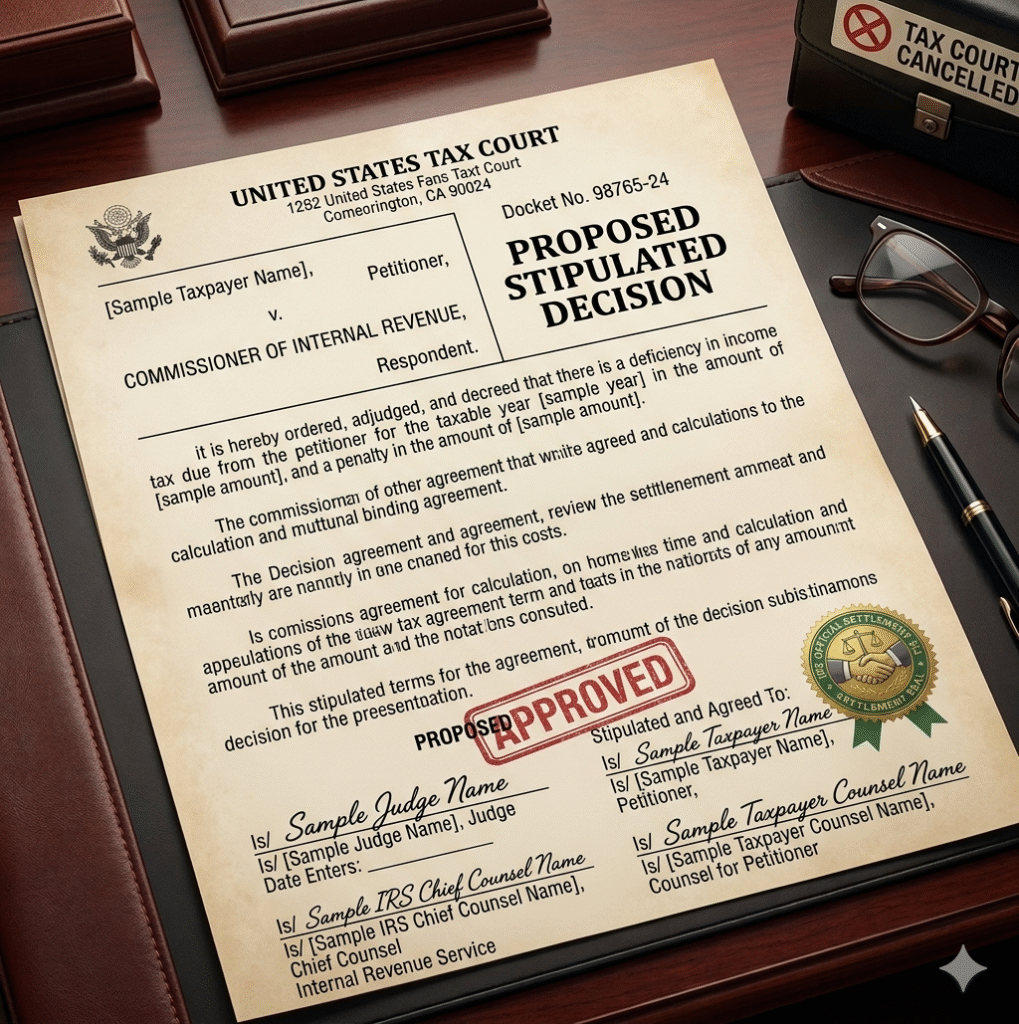
Settling an IRS case means resolving the tax dispute without a trial by reaching an agreement between the taxpayer and the government. In Tax Court cases, settlements typically occur after a petition has been filed but before the case proceeds to trial. The settlement is formalized through a stipulated agreement, which reflects the terms agreed upon by both parties. Once approved by the court, the agreement becomes binding and resolves the case. For taxpayers represented by a Washington, DC tax litigation attorney, settlement is often evaluated alongside trial strategy as part of an overall case approach.
Why Some IRS Cases Settle Before Trial?
The some Tax Court cases are resolved through settlement rather than trial. Several factors contribute to this outcome.
📌Litigation Risk
Both the IRS and the taxpayer face uncertainty in litigation. Even strong cases carry risk.
📌Cost and Time
Trials require time, resources, and legal expenses. Settlement allows both parties to resolve the dispute more efficiently.
📌Hazards of Litigation
IRS attorneys evaluate the likelihood of success and often agree to compromise when the outcome is uncertain.
📌Court Encouragement
The Tax Court encourages settlement discussions and often facilitates resolution through procedural rules.
For these reasons, settlement is a common and practical resolution method in federal tax disputes handled by Washington, DC tax attorneys.
The Role of IRS Office of Chief Counsel
Once a Tax Court petition is filed, the case is assigned to an attorney in the IRS Office of Chief Counsel, who acts as the government’s litigator and settlement officer. This attorney represents the government in litigation and is responsible for evaluating settlement options. IRS counsel has authority to negotiate settlements, concede issues, and recommend resolutions based on litigation risk However, settlement decisions are not arbitrary. They are guided by internal IRS policies, legal standards, and an evaluation of the hazards of litigation, an evaluation of the likely outcome if the case were tried in court. For taxpayers working with a Washington, DC tax attorney, direct engagement with IRS counsel is a key part of the settlement process.
📘Reference:IRS Litigation Guidelines
The “Hazards of Litigation” Standard
A central concept in IRS settlements is the hazards of litigation. This refers to the risk that either party may lose some or all issues if the case proceeds to trial. IRS counsel evaluates:
- Strength of the legal arguments;
- Quality of the evidence;
- Credibility of witnesses; and/or
- Likely interpretation of tax law.
Settlement often reflects a compromise based on these risks. Understanding this concept is critical for effective negotiation, particularly when working with a Washington, DC tax attorney experienced in Tax Court litigation.
📘Reference: IRS Internal Revenue Manual – Litigation Hazards
Common Mistakes in IRS Settlement Negotiations
Taxpayers sometimes undermine their cases during settlement discussions. Common mistakes include:
- Entering negotiations without legal analysis;
- Providing incomplete or inconsistent information;
- Accepting unfavorable terms prematurely;
- Failing to understand litigation risks; and/or
- Delaying negotiations until too late.
Effective settlement requires preparation, documentation, and strategic positioning. Avoiding these mistakes is a key role of a Washington, DC tax litigation attorney.
📘Reference: IRS Appeals Process
What Happens After a Settlement Is Reached?
Once the parties agree to a settlement, the terms are formalized in a stipulated decision. This document is submitted to the Tax Court for approval. After approval:
- The case is closed;
- The IRS may assess the agreed amount; and/or
- The taxpayer must comply with the terms.
Because the agreement is binding, careful review before signing is essential. Taxpayers often rely on a Washington, DC tax attorney to ensure that the terms are accurate.
Why Settlement Strategy Matters?
Settlement is not simply about reaching an agreement – it is about reaching the right agreement. Strategic considerations include:
- Timing of negotiations;
- Presentation of evidence;
- Framing of legal arguments; and/or
- Evaluation of litigation risk.
A well-planned strategy can significantly improve settlement outcomes. For taxpayers in federal tax disputes, working with a Washington, DC tax attorney can make a meaningful difference in how negotiations are conducted and resolved.
When to Seek Legal Guidance?
Taxpayers involved in IRS litigation should consider legal guidance early in the process. Legal assistance is particularly important when:
- A Tax Court petition has been filed;
- Settlement discussions are underway;
- The case involves complex issues; and/or
- Significant tax liability is at stake.
An experienced Washington, DC tax attorney can evaluate settlement options, negotiate with IRS counsel, and prepare the case for trial if necessary.
📘Reference: IRS Form 2848 – Power of Attorney
Need help with a similar issue? Contact our firm today for a consultation.
Most IRS cases are resolved before trial, but successful settlement requires careful planning and legal analysis. Understanding how settlement works – and how the IRS evaluates cases – can significantly affect the outcome of a tax dispute. Taxpayers who approach settlement strategically may reduce liability, avoid trial, and resolve their cases more efficiently.
Contact Pelham PLLC, a Washington, DC tax attorney firm, for confidential IRS litigation and settlement counsel.
FAQs
Can you settle an IRS case before going to trial?
Yes. Most IRS cases are resolved through settlement before trial.
How does IRS settlement work in Tax Court cases?
After a petition is filed, IRS attorneys evaluate the case and may negotiate a resolution based on the hazards of litigation.
What are “hazards of litigation”?
Hazards of litigation refer to the risk that either the IRS or the taxpayer may lose at trial, which often drives settlement decisions.
Do most Tax Court cases settle?
Yes. The majority of Tax Court cases are resolved through settlement rather than trial.
Can the IRS reduce penalties during settlement?
Yes. Penalties may be reduced or eliminated as part of a negotiated settlement.
What does a Washington, DC tax attorney do in IRS settlement negotiations?
A Washington, DC tax attorney evaluates the case, negotiates with IRS counsel or IRS Office of Appeals, and structures settlement terms to reduce liability.
When do settlement discussions begin in Tax Court cases?
Settlement discussions may begin shortly after the petition is filed.
Is it better to settle or go to trial in a tax case?
It depends on the strength of the case, potential risks, and financial considerations. A tax attorney can help determine the best strategy.
Can you negotiate directly with the IRS without a lawyer?
Yes, but IRS litigation procedures are complex, and legal representation often improves settlement outcomes.
When should I contact a Washington, DC tax attorney about settlement?
As soon as a Tax Court case is filed or when settlement discussions begin.